Which Professional Postpartum Hair Treatments Actually Work?

Share

Professional Hair Treatments That May Support Postpartum Hair Recovery
Professional hair treatments may help postpartum hair recovery, especially when shedding lasts longer than expected or regrowth appears slower than normal. The best option often depends on whether you are experiencing temporary hair shedding, slower follicle recovery, or noticeable density loss.
Postpartum hair loss is usually temporary, but many women look for professional treatments when hair does not seem to recover evenly or quickly. According to the American Academy of Dermatology, postpartum shedding is a temporary form of telogen effluvium caused by falling estrogen levels.
Some professional treatments may help postpartum hair recovery more effectively than others depending on follicle health and shedding severity
Professional hair treatments are not all designed to do the same thing. Some hair treatments aim to improve scalp circulation, while others, such as CALECIM® Professional, aim to support follicle signaling, reduce inflammation, or promote a healthier hair cycle.
Treatment effectiveness often depends on:
- how long shedding has lasted
- whether follicles are dormant or miniaturizing
- scalp inflammation
- nutritional status
- underlying female pattern hair loss
Prolonged or excessive shedding should be evaluated to identify contributing triggers instead of assuming postpartum hair loss is the only cause.
Women with mild shedding may recover naturally over time. Women with persistent thinning or visible scalp widening may benefit from additional professional support.
Postpartum hair shedding is usually temporary, but recovery speed varies widely between women
Most postpartum shedding improves gradually, but recovery timelines differ from person to person. Some women regain density within months, while others continue noticing thinning for longer.
According to Johns Hopkins Medicine, postpartum hair loss commonly improves within 6–12 months, although stress, nutrition, genetics, and thyroid disease may influence recovery.
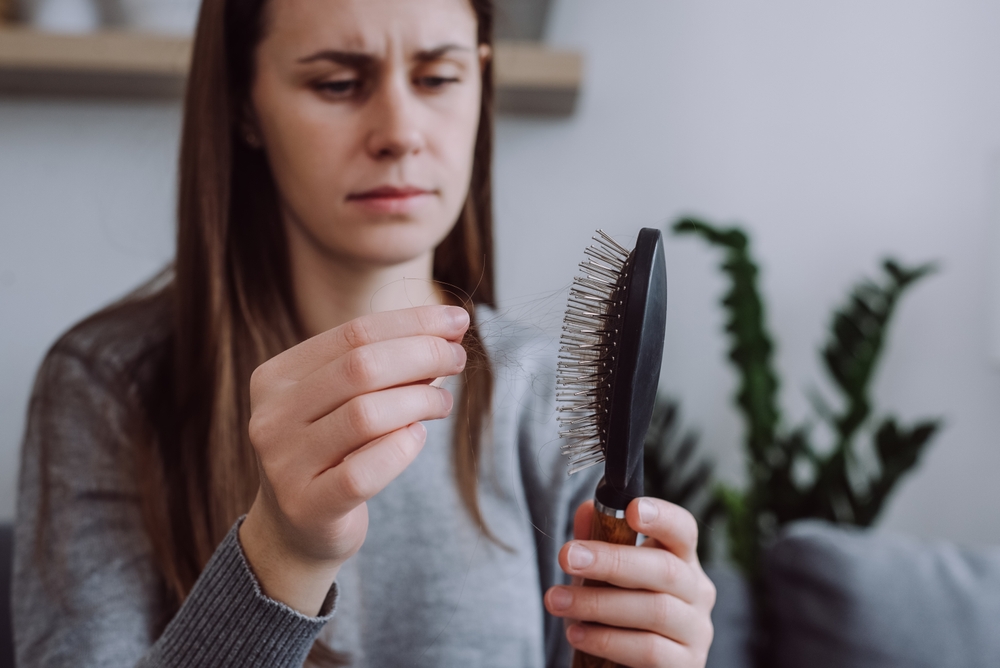
Why hormone shifts push more hairs into the resting phase
During pregnancy, elevated estrogen keeps more hairs in the active growth phase. After delivery, hormone levels drop, causing more follicles to enter the resting telogen phase simultaneously.
According to DermNet, childbirth is a common trigger for telogen effluvium because it shifts more growing hairs into the resting phase. DermNet also notes that normal scalp hair is roughly 85% anagen and 15% telogen.
This explains why shedding often feels sudden several months after birth instead of immediately postpartum.
Why stress, inflammation, and nutrient depletion can prolong thinning
Hormones are not the only factor affecting postpartum recovery. Sleep deprivation, stress, low iron, calorie restriction, breastfeeding demands, and thyroid changes may all influence hair cycling.
Some women also develop increased scalp sensitivity or inflammation during periods of prolonged shedding. In these cases, professional scalp-focused treatments may become more relevant because the issue is no longer only hormonal timing.
PRP, microneedling, and regenerative scalp therapies each support postpartum hair recovery differently
Different professional treatments target different parts of the scalp and follicle environment. Understanding these differences helps explain why one treatment may be more suitable than another.
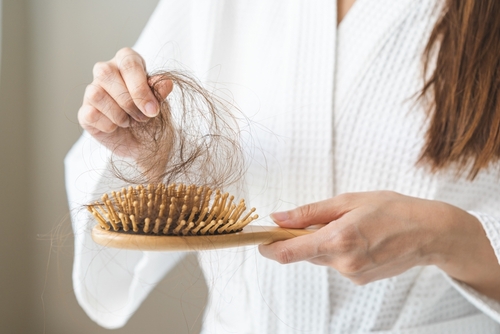
How PRP treatments stimulate the scalp
Platelet-rich plasma (PRP) uses concentrated platelets from a patient’s own blood to deliver growth factors into the scalp.
PRP has been studied for female androgenetic alopecia and may support hair density improvement. However, evidence specific to postpartum telogen effluvium remains limited.
PRP may be more useful when postpartum shedding overlaps with underlying female pattern hair loss rather than short-term shedding alone.
How microneedling supports circulation and scalp renewal
Microneedling creates controlled micro-injuries in the scalp to stimulate repair activity and improve topical product penetration.
Microneedling is a minimally invasive procedure for hair-loss disorders. It may support scalp renewal and enhance treatment absorption.
Microneedling is often combined with topical serums instead of being used alone.
How growth factors and stem cell hair therapies support follicle signaling
Regenerative scalp therapies are designed to support communication pathways involved in follicle activity and repair signaling.
Exosomes can facilitate intercellular communication and contain a variety of bioactive molecules that can potentially stimulate hair follicle regeneration.
Professional postpartum hair treatments compared by mechanism, recovery timeline, and ideal candidate
| Treatment | Main Goal | Best For | Timeline Expectations |
| PRP | Deliver growth factors through platelets | Women with ongoing thinning or female pattern hair loss | Several sessions over months |
| Microneedling | Stimulate scalp renewal and improve serum absorption | Mild thinning and topical treatment support | Gradual improvement over multiple cycles |
| Regenerative scalp therapies | Support follicle signaling and inflammation balance | Slower regrowth or sluggish follicles | Often requires consistent weekly use |
| Supplements and topical care | Support general hair health | Mild postpartum shedding | Variable results |
No professional treatment guarantees immediate regrowth because hair follicles recover gradually through natural growth cycles.
The best treatment often depends on whether you are dealing with shedding, slower regrowth, or visible density loss
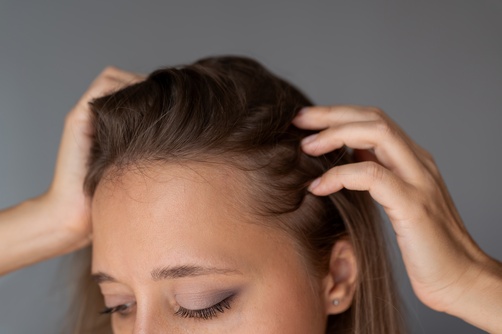
Different postpartum hair concerns require different approaches.
Treatments for excessive shedding
Women with sudden shedding but preserved density may benefit most from supportive scalp care, nutritional correction, stress management, and time.
Aggressive interventions are not always necessary in early postpartum telogen effluvium.
Treatments for dormant follicles and slower regrowth
When regrowth appears delayed or patchy, treatments focused on scalp stimulation and follicle signaling may become more relevant.
This is where microneedling and regenerative scalp therapies are commonly explored.
Treatments focused on improving density
Women noticing widening parts, visible scalp, or persistent thinning may need evaluation for underlying female pattern hair loss in addition to postpartum shedding.
Professional treatments are often more effective when started before thinning becomes advanced.
CALECIM® Professional supports postpartum hair recovery by combining scalp activation with regenerative growth factor technology
CALECIM® Professional Hair Serum is designed to support follicle function using PTT-6®, a proprietary blend containing growth factors, cytokines, proteins, and exosomes.
PTT-6® testing showed a 24% increase in follicle cell proliferation and a 30x decrease in inflammation markers in laboratory testing.
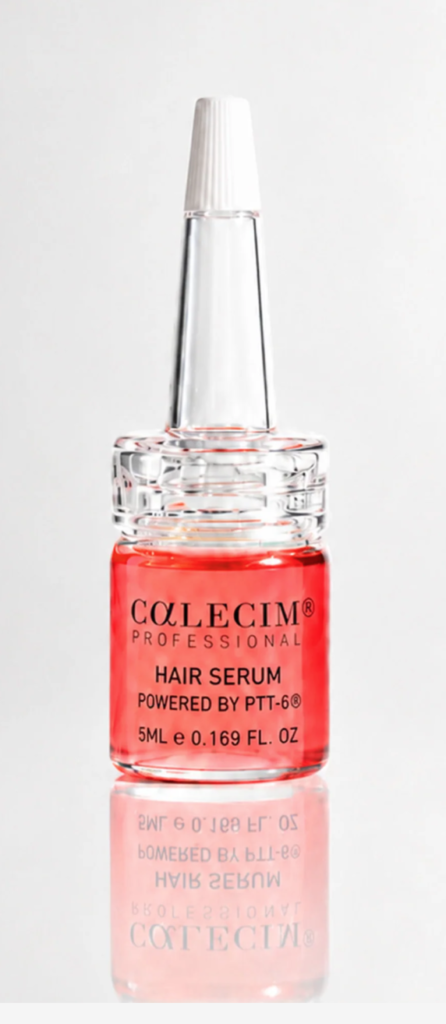
The system combines:
- microneedling support through the derma stamper
- topical regenerative signaling support
- scalp preparation for serum absorption
According to CALECIM®, the brand also reports:
- 16% increase in hair shaft thickness
- 14% increase in hair count
- 15% increase in active follicles per square centimeter
Results can vary depending on the cause and severity of hair loss.
Most postpartum hair treatments require consistency because follicles recover over multiple growth cycles
Hair recovery rarely happens instantly because follicles cycle through growth, transition, and resting phases over time.
Postpartum shedding typically peaks around four months after childbirth, with many women regaining fullness by the child’s first birthday.
This is why professional treatments are usually approached as long-term support rather than quick fixes. Consistency often matters more than intensity.
FAQ
Is postpartum hair loss permanent?
Usually not. Most postpartum hair shedding improves gradually within 6–12 months, although recovery speed varies.
Which professional postpartum hair treatment works fastest?
No treatment works instantly because hair growth follows natural cycles. Some women notice earlier cosmetic improvement with scalp-focused therapies and consistent treatment routines.
Can stem cell hair growth treatments help postpartum thinning?
Regenerative scalp therapies are an emerging area that may support follicle signaling and promote hair regrowth.
Does microneedling help postpartum hair shedding?
Microneedling may support scalp renewal and topical absorption, but it should not be positioned as a guaranteed postpartum shedding treatment.
When should postpartum hair treatment begin?
Women with persistent shedding, slower regrowth, or visible density loss lasting beyond several months may benefit from professional evaluation.
Can postpartum hair density fully recover?
Many women recover much of their previous density, especially when follicles remain active and underlying contributors are addressed early.
Conclusion
Professional postpartum hair treatments may help support recovery when shedding becomes prolonged, density does not return evenly, or regrowth appears slower than expected. The best option depends on the type of thinning, scalp condition, and whether other hair-loss conditions are involved.
For women exploring regenerative scalp support, CALECIM® Professional Hair Serum offers a non-drug approach designed to support follicle signaling, scalp health, and hair cycling through growth factor technology and microneedling-assisted delivery.