Payroll for Startups: How to Scale Without the Admin Headache

Share
From Startup to Scale-Up: Building a Payroll System That Grows With You
Hiring your first few employees is a huge milestone for any startup founder. It’s a clear sign your business is growing and succeeding. But that initial excitement quickly gives way to a new reality: more people mean more paperwork. Suddenly, you’re not just a founder; you’re also an impromptu HR manager, accountant, and payroll clerk.
As your team grows from a handful of dedicated pioneers to a full workforce, the simple methods you used at the start will start to struggle. What was once a quick end-of-month task becomes a complex, time-consuming process. Smart payroll management isn’t just about paying people on time; it’s about building a solid foundation that can support your business as it evolves from a startup to a scale-up.
Why Your DIY Payroll System Won’t Scale
When you’re just starting out, a spreadsheet might seem like a perfectly sensible way to handle payroll for two or three people. It’s cheap, easy to access, and appears straightforward enough. But as your team gets bigger, this manual approach quickly shows its weaknesses. The chance of human error rises with every new employee, from simple data-entry mistakes to miscalculating tax and National Insurance contributions.
The time it takes also becomes a huge drain. What used to take an hour now takes a full day – a day you could have spent on product development, sales, or strategy. Plus, a DIY system offers little security or compliance. Sensitive employee data sitting in a simple file is a risk, and keeping up with ever-changing tax laws and pension requirements becomes a job in itself. This approach simply isn’t built for growth.
Choosing the Right Tools for Growth
Once you’ve outgrown the spreadsheet, you’ll reach a decision point. The way you choose to manage payroll will significantly affect how efficiently you can grow. Generally, you have two main options: dedicated payroll software or a managed payroll service.
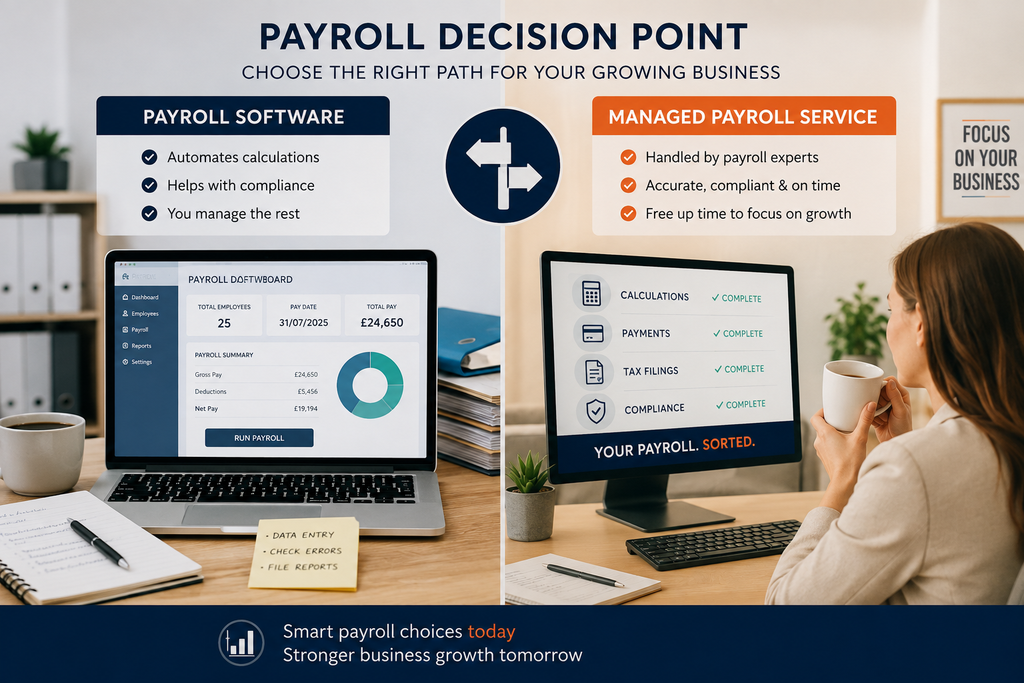
Payroll software can be a big improvement, automating calculations and helping with compliance. However, it still demands a lot of your time and expertise to run correctly. You’re still the one responsible for entering all the data, checking for errors, and making sure everything is filed on time. For a busy founder, this may just shift the administrative burden instead of eliminating it. That’s why many growing businesses look into managed services. Outsourcing payroll for SMEs means handing the entire process to experts. They handle everything from calculations and payments to tax filings and compliance, freeing you up to focus completely on your core business.
Staying Compliant as Your Team Expands
Payroll is more than just moving money around. It’s a function tied to legal and regulatory requirements that get more complicated as your business grows. As you hire more staff, you’ll deal with different tax codes, student loan repayments, parental leave policies, and pension auto-enrolment duties. Getting any of this wrong can lead to serious problems, including HMRC penalties and a loss of trust with your employees.

A strong payroll strategy needs compliance at its heart. This means having a system that automatically updates with the latest legal changes and keeps clear records for audits. For modern businesses, this is a key part of broader HR strategies for startups, ensuring your people operations are sound from day one. It’s not an area where you can afford to cut corners, especially when your reputation as an employer is on the line.
Integrating Payroll with Your HR Tech Stack
Modern businesses don’t operate in isolation, and their software shouldn’t either. As you grow, you’ll likely adopt various tools to manage different parts of your business, from time-tracking and holiday approval systems to performance management platforms. If your payroll system doesn’t talk to these other tools, you create unnecessary work and increase the chance of errors.
Imagine an employee’s overtime hours tracked in one system that must be manually re-entered into your payroll software. It’s inefficient and a recipe for mistakes. The benefits of an integrated HR tech stack are huge, creating one reliable source of truth for all employee data. This integration streamlines processes, reduces administrative work, and provides more accurate data for financial planning and reporting. It turns your payroll from a separate chore into a connected part of your business operations.
Communicating Pay and Benefits Clearly
Good payroll management isn’t just a hidden administrative task. It directly affects your team’s morale and their trust in the company. When employees are paid correctly and on time every time, it builds a foundation of stability and professionalism. Frequent mistakes or delays create anxiety and damage your reputation as an employer.

Beyond accuracy, clarity is essential. Employees should get clear, easy-to-understand payslips that show their earnings, deductions, and taxes. They should also know who to talk to if they have a question about their pay. A good payroll system, whether in-house or managed, should make this transparency easy. It shows respect for your team and reinforces that you are an organised, reliable, and fair employer – qualities that are crucial for attracting and keeping top talent as you grow.
Getting your payroll strategy right is a critical step on the journey from a scrappy startup to a thriving scale-up. By moving beyond temporary fixes and adopting professional tools or services, you build an operational backbone that supports your ambitions and your team.