How to get rid of leather jackets from your garden!

Share

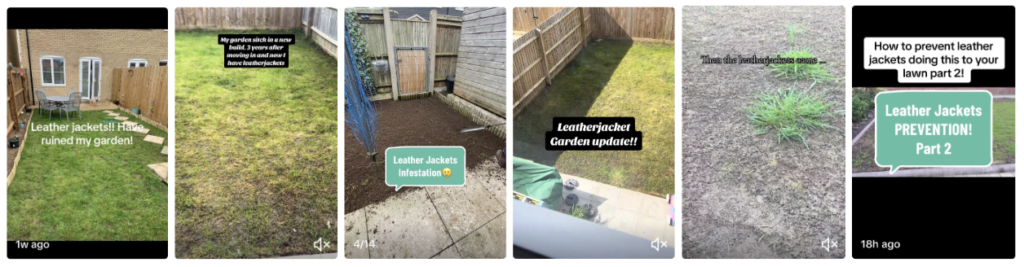
Leather Jackets are infesting new build gardens and going viral for it: Experts share how to eliminate them!
“Leather jackets are the larvae of the crane fly, more commonly known as daddy longlegs, and they cause damage to lawns by feasting on the roots of the grass. New-built homes are particularly susceptible to leatherjacket infestations due to the fresh turf often used in their gardens, which can become an ideal breeding ground for these pests. As these properties establish their gardens, it’s vital to integrate preventive measures from the start. This includes choosing hardy grass species and implementing regular lawn health checks to catch infestations early. Educating homeowners on the signs of leatherjacket activity, such as spongy turf and visible feeding damage, is also crucial. By taking these steps, we can protect the aesthetic and structural integrity of the lawns surrounding these new homes.”
Identifying Leatherjackets
“Identifying a leatherjacket problem early is crucial to preventing significant lawn damage. Look out for signs such as increased bird activity on your lawn or visible yellow patches. Both of these might indicate that there is an infestation beneath the surface.”
Preventing Leatherjackets
“Maintaining a healthy lawn is the best defence against leatherjackets. Whilst it might not completely deter them, regular aeration and the use of a high-quality feeding program can keep your grass robust enough to withstand and recover from leatherjacket damage.”
“Leatherjackets thrive in very moist conditions, so aerating your lawn can be really beneficial in drying out your soil slightly, making it more difficult for eggs to hatch and the larvae to thrive.”
Controlling Leatherjackets
“Biological controls, such as nematodes, are both effective and environmentally friendly. These microscopic worms enter the leatherjacket larvae, infecting them and stopping them from feeding within around three days. Subsequently, the leatherjackets will die after about 14 days. The nematodes then reenter the soil and continue the same process on any other pests, making it a naturally longer lasting pest control.”
“Leatherjackets are most vulnerable between late summer and early autumn, so this is an ideal time to tackle them with nematodes.”
Manually Removing Leatherjackets
“For smaller or more manageable areas, physically removing leatherjackets by hand can be a simple yet effective method. It involves manually extracting the grubs from the soil, which can help reduce their numbers significantly.”
Chemical Treatments
“Whilst there are some chemical treatments available, they should be considered as a last resort due to their potential environmental impacts. If you must use them in the case of a severe infestation, make sure to choose products specifically formulated for leatherjackets and apply them carefully, making sure to follow the manufacturer’s instructions.”