Business Setup Beside a Mega-Project: Planning Around the Dubai 2032 Airport Timeline

Share
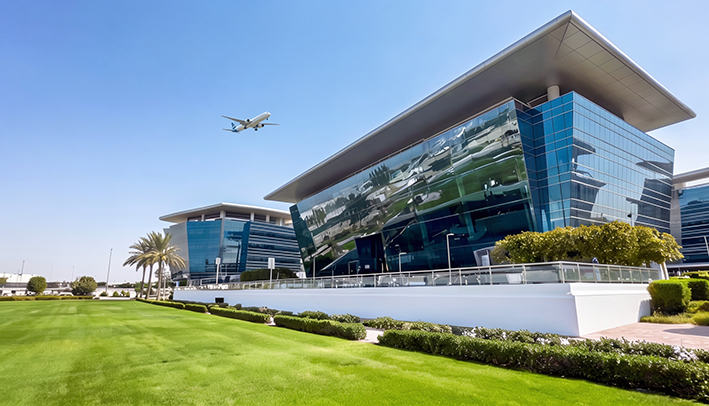
Dubai South Business Setup: Planning Around the 2032 Airport Expansion
Dubai South Business Hub Free Zone sits beside what the Dubai Media Office calls one of the most significant strategic projects shaping Dubai’s economic future. If you are planning a company here, the useful question is not how large the airport will be, but when it starts paying you back.
If you are researching business setup at Dubai South Business Hub Free Zone in 2026, you will meet the same headline sooner or later: Al Maktoum International Airport is being enlarged on a scale few cities have attempted. It is reasonable to ask whether that matters to a company that has not signed its first contract. It does, just not on the schedule the headlines imply.
What has actually been announced?
Start with the official record. On 15 June 2026, the Dubai Media Office said the project remains on course to commence operations in 2032. The site covers 70 square kilometres, five times the size of Dubai International, and on completion of its final phase it is designed to handle more than 260 million passengers and 12 million tonnes of cargo a year. The same announcement said more than AED 55 billion of further contracts would be awarded by the end of 2026, and Sheikh Hamdan bin Mohammed, Crown Prince of Dubai, described the project as a key enabler of the Dubai Economic Agenda, D33.

What deserves more attention is the distance between those numbers and today.
Which clock is your business running on?
The first clock is the present. According to Dubai Airports, Al Maktoum International currently supports seasonal charter and scheduled operations in addition to cargo and general aviation, while Dubai International remains the emirate’s main passenger gateway. If you import, re-export or run a service that supports freight, the airport’s proximity is already relevant. If your plan depends on millions of travellers walking past your door, it is not yet.
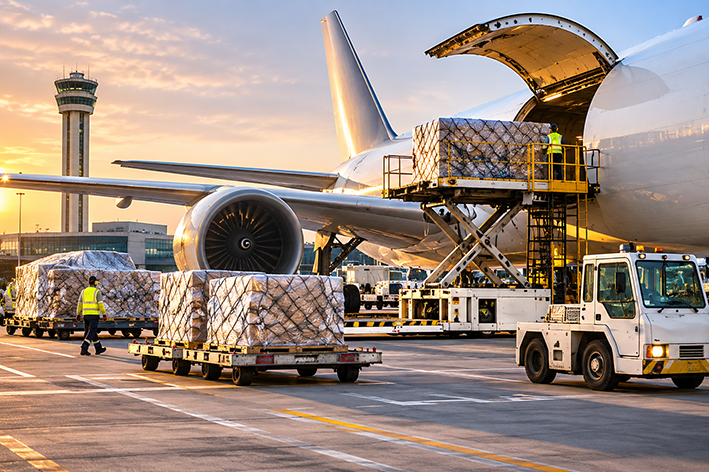
The second clock covers the construction years. AED 55 billion in contracts does not sit still. It becomes engineering consultancies, equipment suppliers, catering for site camps, recruitment agencies, customs brokers and compliance advisers. Most of those firms never make a headline, and plenty of them are small. A consultancy or trading company licensed at Dubai South Business Hub Free Zone does not need a finished terminal to sell into this cycle. It needs to be findable by the people doing the procurement.
The third clock starts in 2032. Khaleej Times reported in September 2026 that flydubai is expected to lead the move from Dubai International, beginning with a small number of aircraft from 2027, with the larger shift following the new terminal. This is where passenger-facing retail, hospitality services and airline-adjacent businesses come into their own. It is also the part of the plan most exposed to revision and delay.
What does this change in practice?
Tie each revenue assumption to the right clock. A sensible first-year plan for a new company at Dubai South Business Hub Free Zone rests on today’s cargo and trade flows and on the supplier demand that construction creates. It does not rest on a passenger boom years away. Treat 2032 as upside, not as the foundation.

Be clear, too, about what a license gives you. A Dubai South Business Hub Free Zone license lets you trade in your approved business activities. It does not include airport or logistics operating rights, aviation privileges or access to other Dubai South facilities, which sit with separate authorities and operators.
It also affects how much space you take. Dubai South Business Hub Free Zone says its license package includes access to a flexi-desk, and it lists warehousing separately among its post-license services. For most early-stage companies, starting light and adding space as contracts arrive is a more defensible order of operations than leasing ahead of demand. The free zone adds that more business groups or activities can be added later for an additional fee, which suits the same cautious sequence.
Which signals should you watch?
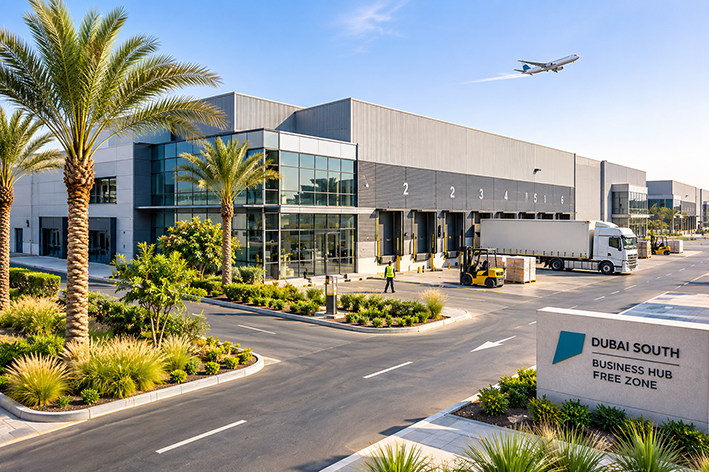
Contract awards come first, because they show which work packages are live and who is hiring. Next come confirmed transport links to the site, since they change where staff are willing to live and how long they will commute. Airline relocation announcements matter most if you sell to passengers. And your own order book, the one indicator you fully control, should be checked against all three.
Why does the quieter strategy tend to work?
Dubai’s leadership has committed serious money and attached a date to this project. But the founders who do well around large infrastructure are rarely the ones who bet on opening day. They are the ones who were already trading, already invoicing and already known to buyers when the work began.
So build your client base on the cargo and supply-chain activity that exists today. If the airport arrives on schedule, you will be a supplier with a track record rather than a newcomer with a pitch. If the timetable moves, as large timetables sometimes do, you will still have a business that does not depend on it.
Next step: Check my activity to confirm that the work you plan to sell into this construction cycle is an approved business activity.
About Dubai South Business Hub Free Zone
Dubai South Business Hub Free Zone is a fully digital free zone for company formation in Dubai, offering 100% foreign ownership and over 3,500 approved business activities with up to five included on a single license at no additional cost. Founders can complete registration, licensing, visa processing, banking support and ongoing compliance entirely online. Located in Dubai South, the free zone has direct access to Al Maktoum International Airport, Etihad Rail and Jebel Ali Port. For more information, visit dubaisouthbh.com, email setup@dubaisouthbh.com or call 800-DSHUB (37482).