The Most Popular Cosmetic Surgeries For Men

Share

At Karidis, we have seen a surge in prospective patients, particularly men, over the last 18 months. The annual report from The Aesthetic Society revealed that the patient demographic is getting younger and younger. They found that 40% of all procedures carried out in 2020 were in the 35 to 50 age group and this is something we’ve also experienced at the Karidis Clinic, with the average age of our male patient seeking cosmetic surgery now being 36.
As perceptions of ageing and the need for ‘self-care’ change, more and more men are finding it acceptable – even necessary – to seek cosmetic rejuvenation in a bid to boost self-esteem. In an increasingly challenging global financial environment, the way that others perceive you can have a significant impact on your fiscal and social well-being. You may feel full of energy and ready to take on the world, but if everyone around you sees a furrowed brow or deep, dark bags under the eyes, they can be quick to make a negative judgement.
A good night’s sleep or super-hydrating moisturiser can only do so much, which is where procedures like the male facelift or male eyelid lift come in. In the most general terms, male cosmetic surgery is no different from a procedure performed on a female patient. Still, there are specific considerations and demands that an experienced plastic surgeon must take into account to ensure the optimal result for their male patients.
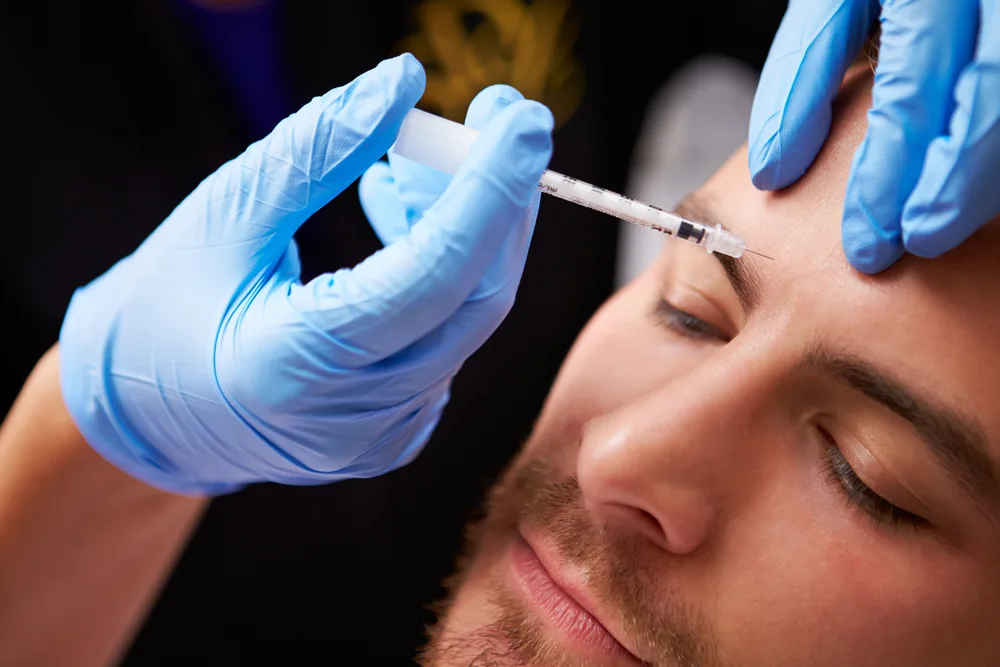
A HAIRY ISSUE
Technique, particularly concerning incisions, is one of the key factors. A recent article, published in this month’s issue of Plastic and Reconstructive Surgery, focused on the challenges of performing a facelift on a patient that decided to embrace hair loss.
Some plastic surgeons will extend the facelift incision along the temple in a location that’s easily hidden behind the hairline, but this is not an option for men suffering from Male Pattern Baldness. Statistics vary, but it’s estimated that by the age of 35, 40% of men will experience noticeable hair loss and three-quarters of all men will eventually be affected.
Italian plastic surgeon Michele Pascali and colleagues proposed a new incision that follows the shape of the front of the ear so that the outline of the ear camouflages the scar. A survey of the 68 balding patients who underwent this technique found a high satisfaction rate with the quality of the facelift and the scars.
London cosmetic surgeon Mr Alex Karidis has long used a similar, short scar technique, achieving high patient satisfaction. However, he does make a critical distinction with his male patients: “With female patients, I often make incisions within the ear, as that allows me to camouflage any scarring behind the tragus. With a man, I have to stop just before the ear rather than inside, otherwise, he’ll have to start shaving his ears in the future.”
Other considerations that Mr Karidis takes into account when planning male cosmetic surgery include the fundamental difference between the sexes in the composition of the skin. Men have thicker, more oily skin that tends to slow down ageing changes such as loss of volume and skin sagging, but this must be taken into account when planning a facial rejuvenation procedure.
TOP MALE COSMETIC SURGERY PROCEDURES
In The Aesthetic Society’s report, body contouring dominated with liposuction, gynaecomastia and abdominoplasty proving most popular.

1. Male Liposuction
Although lipo is equally in demand with both men and women, it doesn’t mean they want the same results. Men don’t want to be just thin; they want to be defined and to achieve the ideal male physique of broader shoulders leading to a narrower waist.
As Mr Alex Karidis explains: “There is definitely a gender divide here – anything below the waist is usually a female concern as men tend to carry their weight in the chest, abdomen and waist area.
“Skin quality is an essential part of our assessment – if you have very poor skin quality, your result will always be slightly compromised when you remove the underlying fat cells. An experienced surgeon will assess your skin quality and give you an honest appraisal of the results you can expect from treatment.”
2. Male Breast Reduction
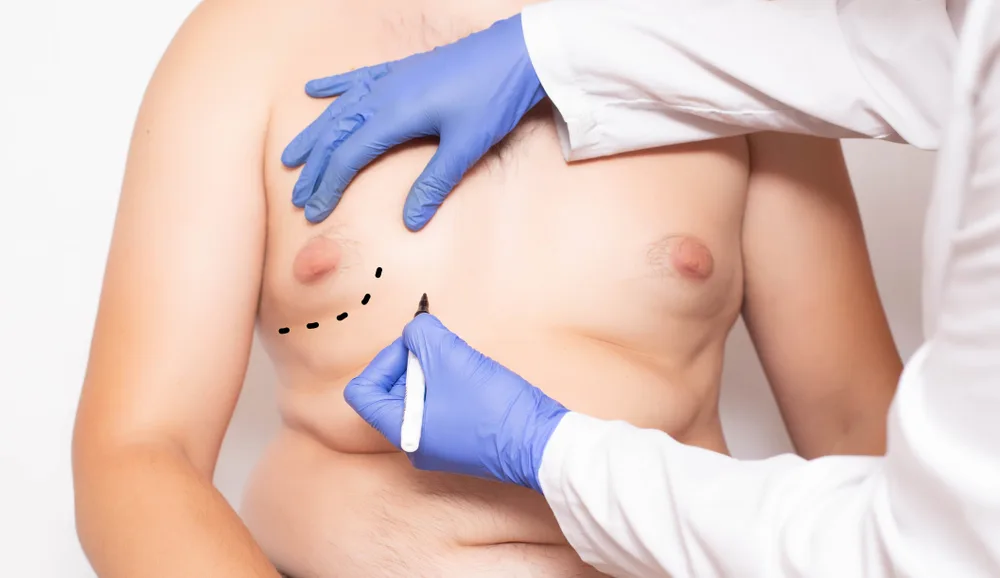
This is one of the most popular male procedures which is not surprising as gynecomastia is such a common condition, thought to affect 15% of adult males in the UK and one in four men over the age of 50.
Gynaecomastia can be the result of an over-development of glandular breast tissue or excess fatty tissue in the chest area. Typically, it’s a combination of the two and surgeons that only offer liposuction as a way of correcting gynecomastia may be doing their patients a disservice. When liposuction alone is performed on patients with fatty gynecomastia, some excess breast tissue remains that it can leave the nipples looking puffy.
For most patients, a combination of liposuction and breast tissue removal is required and Mr Alex Karidis has become renowned for his male breast surgery technique. Determining the amount of fatty tissue in relation to breast tissue varies from patient to patient and surgery must be uniquely tailored to the individual. Mr Karidis’ innovative quilting stitching technique was developed to overcome a complication that is common to the gynecomastia procedure – the risk of a haematoma. His technique won BAAPS Hackett Memorial Prize and has been covered in numerous peer publications.
Mr Karidis explains what spurs him on to develop and innovate new and improved surgical techniques: “Everything we do as plastic surgeons is on show. We are operating on the skin, muscle and tissues, and it’s not enough to cobble something together in the hope it will work. It’s more than addressing function; it’s a question of form.
3. Male Abdominoplasty
Men often cite their tummy as their main problem area. Although we are bombarded by images of flat stomachs and six packs on social media, it is often challenging to tone up the abdomen with diet and exercise alone. Hormonal changes can lead to middle-aged spread; as levels of testosterone start to decrease from age 30 onwards, this encourages the body to store fat in the belly.
Stress is also a factor. When you’re stressed you release cortisol and this fight or flight hormone mobilises fat from other areas of the body to your abdomen so it’s on hand if your vital organs need increased energy.
Mr Karidis’ award-winning stitching technique means he stands out in the field of male cosmetic surgery. “It’s not just about reducing risk of complications; it’s also how it performs.
“During a tummy tuck, you’re effectively taking skin from the upper abdomen, pulling it down, tightening the muscle and fixing it lower down the abdomen. It has to flow with the movement of the body and the body lines. You then minimise tension on the incision so scarring will be better. Tension kills scars.”