
The Biggest Culprits Behind Heat Loss In Your Home (And How To Fix Them)

Share

Due to the rising costs of keeping your home warm, people are increasingly keen to save money on their bills. Identifying where your house is losing heat can help keep your home warmer without turning up your thermostat.
Matan Korin, Vice President of Sales at Ecoline Windows, discusses the major culprits behind heat loss in your home and provides some practical solutions.
Poor Insulation
Poor insulation allows warm air to escape during the winter and hot air to infiltrate during the summer, which can make temperature regulation challenging year-round. Upgrading or adding insulation in key areas (e.g. walls, attics, and floors) can help keep your home warm in winter and cool in summer, saving you money on both your heating and air conditioning.
Exposed water pipes in unheated areas can make your heating system work harder. Adding foam pipe insulation prevents heat loss and potential freezing during cold spells.
Inadequate Windows And Doors
Matan comments, “If your doors and windows allow cold air to enter, you could lose one-quarter of your home’s energy. It’s therefore crucial to seal gaps and cracks with weatherstripping or caulking”.
Replace faulty windows and doors with energy-efficient options to improve your home’s insulation. If they’re Energy Star-certified, the improvements in energy efficiency could be 15% for doors, 20% for windows, 35% for skylights, and 55% for sliding glass doors.
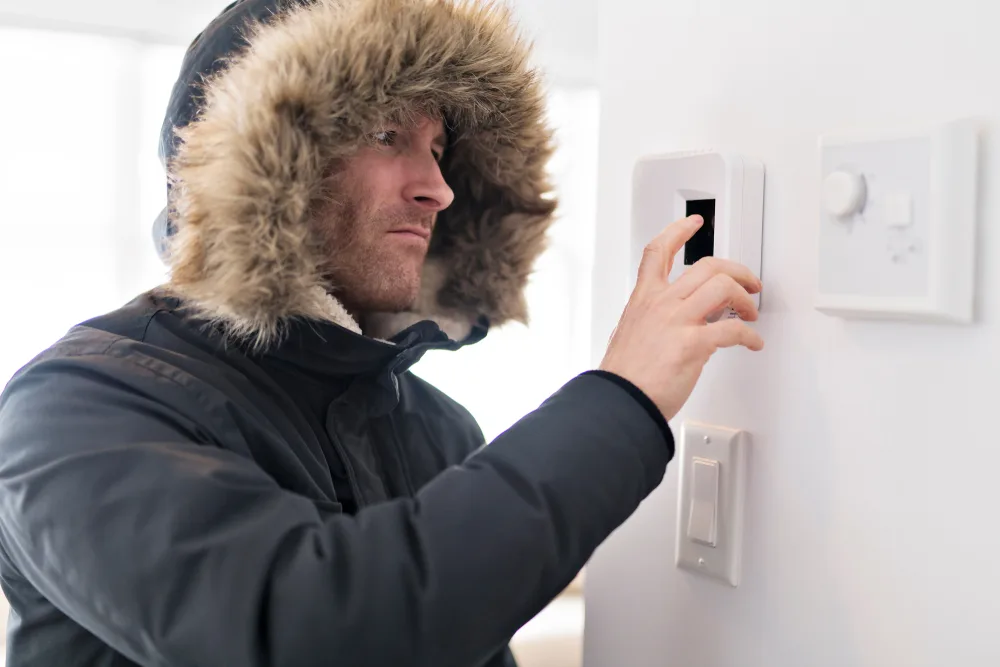
An Inefficient Heating System
Schedule regular maintenance for your furnace or boiler to avoid heat loss and energy wastage. If it’s outdated, upgrading it to a more energy-efficient (and cost-efficient) model can make a big difference to your monthly bills.
Leaky Ductwork
Leaky ductwork can cause warm air to escape into unconditioned spaces rather than reaching its intended destination. Inspect your ductwork for leaks and seal them with duct tape or mastic sealant.
Drafts And Gaps
Drafts and gaps in the structure of your home can significantly contribute to heat loss. These openings, often found around doors, windows, and utility entrances, allow warm air to escape and cold air to enter, undermining the efficiency of your heating system.
To tackle this problem, start by identifying drafts using a simple hand test or a thermal detector. Then, seal these gaps with appropriate materials: weatherstripping for doors and windows, and caulk for cracks in walls or around frames. This straightforward and cost-effective solution not only reduces heat loss but also enhances the overall comfort and energy efficiency of your home.
Addressing these common issues will not only save you money and make your home more comfortable, but it will also improve your quality of life and safeguard the health of your household.

